

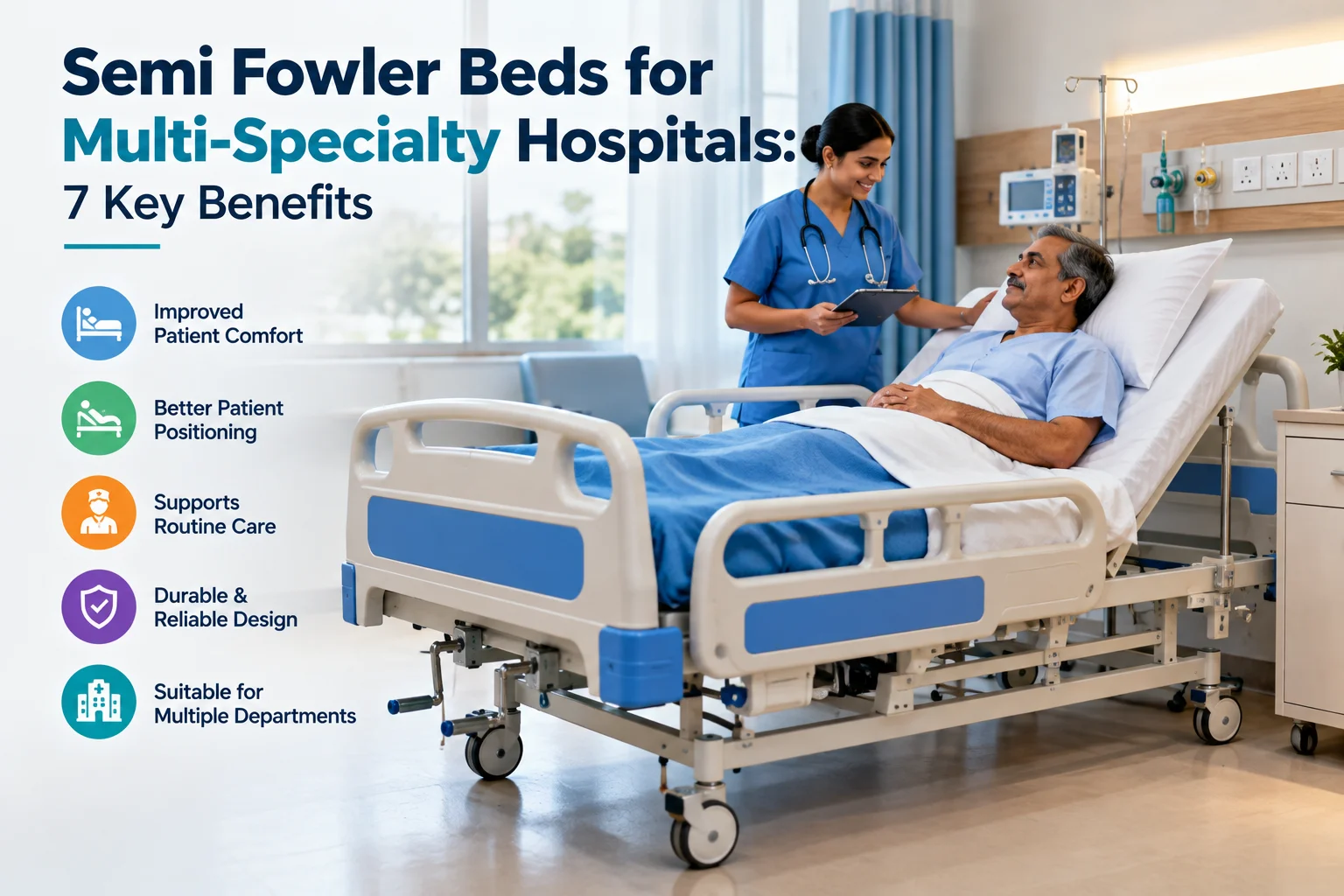
Patient comfort, safe positioning, and efficient care are essential priorities in modern healthcare facilities. Semi Fowler Beds for Multi-Specialty Hospitals help healthcare professionals position patients with the upper body elevated, supporting routine examinations, recovery, and daily nursing activities. For hospitals that treat patients with different medical needs, choosing suitable beds is an important part of building a functional and patient-friendly environment.
Multi-specialty hospitals serve departments such as general medicine, orthopedics, surgery, cardiology, and other clinical specialties. Each department may have different requirements for patient positioning, accessibility, cleaning, and staff workflow. Therefore, hospital furniture should offer an appropriate balance of comfort, durability, safety, and ease of use.
Shiv Balaji Surgical, a trusted hospital beds supplier, is a company to consider when exploring hospital beds and medical furniture for healthcare facilities. Before selecting a bed, hospital administrators and procurement teams should understand the design of a semi Fowler bed, its practical applications, available features, and the factors that influence long-term value.
Table of Contents
- What Are Semi Fowler Beds for Multi-Specialty Hospitals?
- Key Benefits of Semi Fowler Hospital Beds
- Important Features to Consider Before Buying
- Applications Across Different Hospital Departments
- How to Choose Semi Fowler Beds for Multi-Specialty Hospitals
- Maintenance and Safety Considerations
- Why Consider Shiv Balaji Surgical for Hospital Beds?
- Frequently Asked Questions
- Conclusion
What Are Semi Fowler Beds for Multi-Specialty Hospitals?
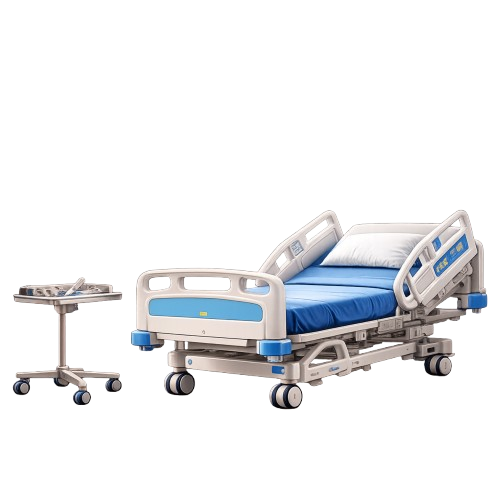
Semi Fowler Beds for Multi-Specialty Hospitals are patient beds designed to raise the head and upper body to an inclined position. Depending on the model, the head section may be adjusted manually through a crank mechanism or through another supported adjustment system.
This design allows caregivers to position patients more comfortably than a completely flat bed in situations where upper-body elevation is appropriate. It can support activities such as eating, reading, communicating with visitors, and participating in certain routine care procedures.
The precise adjustment range depends on the bed's design. A typical semi Fowler configuration elevates the head section to a moderate angle, often around 30 degrees, although the available range varies by product. Healthcare professionals should determine the appropriate patient position based on the individual's condition and clinical requirements.
For a multi-specialty hospital, these beds can be useful in general wards, recovery areas, and other settings where adjustable upper-body positioning is required. However, they are not a substitute for every type of specialized hospital bed. Intensive care units, bariatric care, and certain surgical applications may require beds with additional functions or specific clinical features.
Key Benefits of Semi Fowler Hospital Beds
Improved Patient Comfort and Positioning
One of the main advantages of a semi Fowler bed is the ability to elevate the upper body. Patients who find it uncomfortable to remain completely flat may appreciate the option to rest in a raised position when clinically suitable.
The adjustable head section also helps patients participate in everyday activities while remaining in bed. For example, a patient recovering from a procedure may find it easier to communicate with caregivers or eat a meal when positioned appropriately.
Comfort depends on more than the angle of the bed. Mattress quality, pressure distribution, bed dimensions, and the patient's individual needs also influence the overall experience.
Support for Routine Nursing Activities
Adjustable hospital beds can help nursing staff position patients for routine care. Raising the head section may make certain activities, such as assisting with meals or conducting some examinations, more convenient.
A practical bed design can also support smoother workflows by allowing staff to make positioning adjustments without repeatedly moving the patient to another surface. Nevertheless, caregivers should follow the hospital's patient-handling procedures and use appropriate assistance when repositioning patients who need additional support.
Practical Choice for General Hospital Wards
Multi-specialty hospitals require furniture that serves a range of common clinical situations. Semi Fowler beds can be suitable for general wards where upper-body elevation is useful and a full range of advanced bed functions is not always necessary.
Manual models may appeal to facilities looking for straightforward operation and a relatively simple mechanism. The final selection should still account for the expected workload, frequency of adjustment, patient population, and maintenance arrangements.
Efficient Use of Hospital Resources
Choosing beds that match the needs of a particular ward can help hospitals allocate equipment more effectively. A general ward may not require the same features as a critical care unit, so selecting an appropriate bed configuration can help avoid paying for functions that the intended department does not need.
Procurement teams should compare the complete cost of ownership, including purchase price, delivery, installation, routine maintenance, spare parts, and expected service life. A low initial price alone does not guarantee better long-term value.
Important Features to Consider Before Buying
When comparing Semi Fowler Beds for Multi-Specialty Hospitals, examine the construction, adjustment mechanism, dimensions, safety features, and cleaning requirements. These details directly affect the bed's suitability for daily healthcare operations.
Frame Construction and Load Capacity
The frame should provide stable support for the intended patient load and withstand routine hospital use. Materials, welding quality, surface finish, and overall construction can influence durability.
Ask the supplier to specify the safe working load and clarify whether it refers to the patient alone or includes additional loads according to the manufacturer's definition. Hospitals should select beds that meet their patient population's needs without exceeding the stated limit.
The frame finish should also tolerate the cleaning products and disinfection procedures used by the facility. Confirm the manufacturer's cleaning instructions before adopting a particular model.
Manual Adjustment Mechanism
Manual semi Fowler beds commonly use a crank system to raise or lower the head section. The mechanism should operate smoothly and allow caregivers to make adjustments without excessive effort.
During evaluation, check the crank handle, moving joints, stability, and ease of access. Procurement teams should ask about routine lubrication requirements, replacement parts, and service support.
For facilities where beds require frequent adjustment, compare manual and powered options according to staff workload and patient needs. An electric bed may provide additional convenience, but its suitability depends on the department, budget, and maintenance capacity.
Side Rails and Patient Safety
Side rails may help support patient positioning and reduce the risk of accidental rolling in appropriate circumstances. Their design should suit the bed, mattress, and intended patient population.
However, side rails do not eliminate falls and can introduce entrapment risks if the bed, mattress, rail, or patient is unsuitable for the configuration. Hospitals should assess each patient's mobility, cognition, and clinical condition before deciding how to use rails.
Check that rails, locking mechanisms, and other moving components function correctly. Staff should receive appropriate training in their safe use.
Mattress Compatibility and Dimensions
The mattress should match the bed frame's specified dimensions and support the intended use. Incorrect sizing can create gaps, affect comfort, or introduce safety concerns.
Consider mattress cleaning, moisture resistance, durability, and pressure-management requirements. Patients at risk of pressure injuries may require a specialized mattress selected through clinical assessment rather than a standard mattress alone.
Also verify the bed's overall width and length, especially when rooms have limited space or equipment must move through narrow corridors and doorways.
Applications Across Different Hospital Departments
Semi Fowler Beds for Multi-Specialty Hospitals can be used in several clinical environments, provided the bed's features meet the department's requirements and the patient's condition.
General Medicine and Inpatient Wards
In general medicine wards, patients may need beds for observation, routine treatment, rest, and recovery. An adjustable head section can help staff position patients for meals and everyday activities, where appropriate.
Hospitals should consider ease of cleaning, mattress replacement, movement within the ward, and access for caregivers when selecting beds for these areas.
Postoperative Recovery Areas
Some patients recovering after surgery may benefit from a raised upper-body position, depending on the procedure and the treating team's instructions. A semi Fowler bed can support this positioning when the clinical team considers it appropriate.
However, certain postoperative patients need specialized monitoring, height adjustment, or additional positioning features. The hospital should select equipment according to the procedure, recovery protocol, and patient's condition.
Orthopedic and Other Specialty Wards
Orthopedic departments may care for patients with different mobility limitations. Bed height, access, stability, mattress suitability, and compatibility with mobility aids can therefore be important selection factors.
Other specialties may also use semi Fowler beds for observation, rest, and routine inpatient care, such as in cardiology or surgical wards. In each case, the clinical team should confirm that the bed's features match the department's protocols and the patient's needs.
How to Choose Semi Fowler Beds for Multi-Specialty Hospitals
Start by listing the departments that will use the beds and the patient groups they serve. This helps determine whether a manual semi Fowler bed is sufficient or whether other departments need additional functions.
- Define clinical requirements: Confirm the required head elevation range, patient load, and any department-specific needs with clinical staff.
- Compare specifications: Review frame material, dimensions, safe working load, side rails, wheels, and locking mechanisms.
- Check cleaning and durability: Choose finishes and components that suit your facility's cleaning and disinfection routines.
- Evaluate support: Ask about warranty coverage, spare parts, installation, and after-sales service.
- Consider total cost: Compare long-term ownership costs rather than purchase price alone.
Where possible, request product specifications and, if feasible, inspect a sample before placing a larger order.
Maintenance and Safety Considerations
Regular maintenance helps keep hospital beds safe and dependable. Staff should periodically inspect the frame, crank mechanism, side rails, wheels, wheel locks, and mattress platform for wear, looseness, or damage.
Moving parts may need routine lubrication according to the manufacturer's instructions. Any bed with a faulty mechanism, unstable frame, or damaged rail should be removed from use until it has been properly repaired.
Cleaning should follow the hospital's infection prevention protocols and the manufacturer's guidance. Staff training on safe operation, wheel locking, rail use, and patient handling is equally important for reducing avoidable risks. For broader guidance, hospitals can refer to resources such as the WHO patient safety materials.
Why Consider Shiv Balaji Surgical for Hospital Beds?
Shiv Balaji Surgical offers hospital beds and medical furniture for healthcare facilities, including options suited to multi-specialty hospitals, clinics, and nursing homes. Facilities exploring a hospital bed supplier in India should compare product specifications, delivery arrangements, and after-sales support alongside price.
Hospitals can contact Shiv Balaji Surgical to discuss bed configurations, specifications, and purchasing requirements that match their departments and patient needs.
Conclusion
Semi Fowler beds provide adjustable upper-body positioning that supports patient comfort and routine nursing care across many hospital settings. Selecting the right model requires attention to frame strength, adjustment mechanism, side rail safety, mattress compatibility, and the needs of each department.
By comparing specifications, considering long-term maintenance, and confirming supplier support, hospitals can make informed decisions when choosing Semi Fowler Beds for Multi-Specialty Hospitals. Shiv Balaji Surgical is a name healthcare buyers can explore when evaluating hospital furniture solutions.
Frequently Asked Questions
What is a semi Fowler bed used for?
A semi Fowler bed raises the patient's head and upper body to a moderate angle, supporting comfortable resting, eating, communication, and selected routine care activities.
Are semi Fowler beds suitable for all hospital departments?
They suit many general wards and recovery areas, but intensive care, bariatric care, and certain surgical applications may need beds with additional functions.
Should a hospital choose a manual or electric semi Fowler bed?
It depends on staff workload, how often positions are adjusted, the department, budget, and maintenance capacity. Manual beds are simpler, while electric beds offer more convenience.
What should I check before buying semi Fowler beds?
Review frame construction, safe working load, adjustment mechanism, side rails, mattress compatibility, dimensions, cleaning requirements, warranty, and after-sales support.
Where can I find hospital beds in India?
Healthcare facilities can contact Shiv Balaji Surgical to enquire about semi Fowler bed configurations, specifications, and purchasing requirements.

Leave a Reply